Fiscal Year 2025
Annual Report
Fearless Compassion Builds Fearless Futures
Serving adults with severe and multiple disabilities across Northern Virginia since 2006
sparcsolutions.org
Fearless Compassion Builds Fearless Futures
Serving adults with severe and multiple disabilities across Northern Virginia since 2006
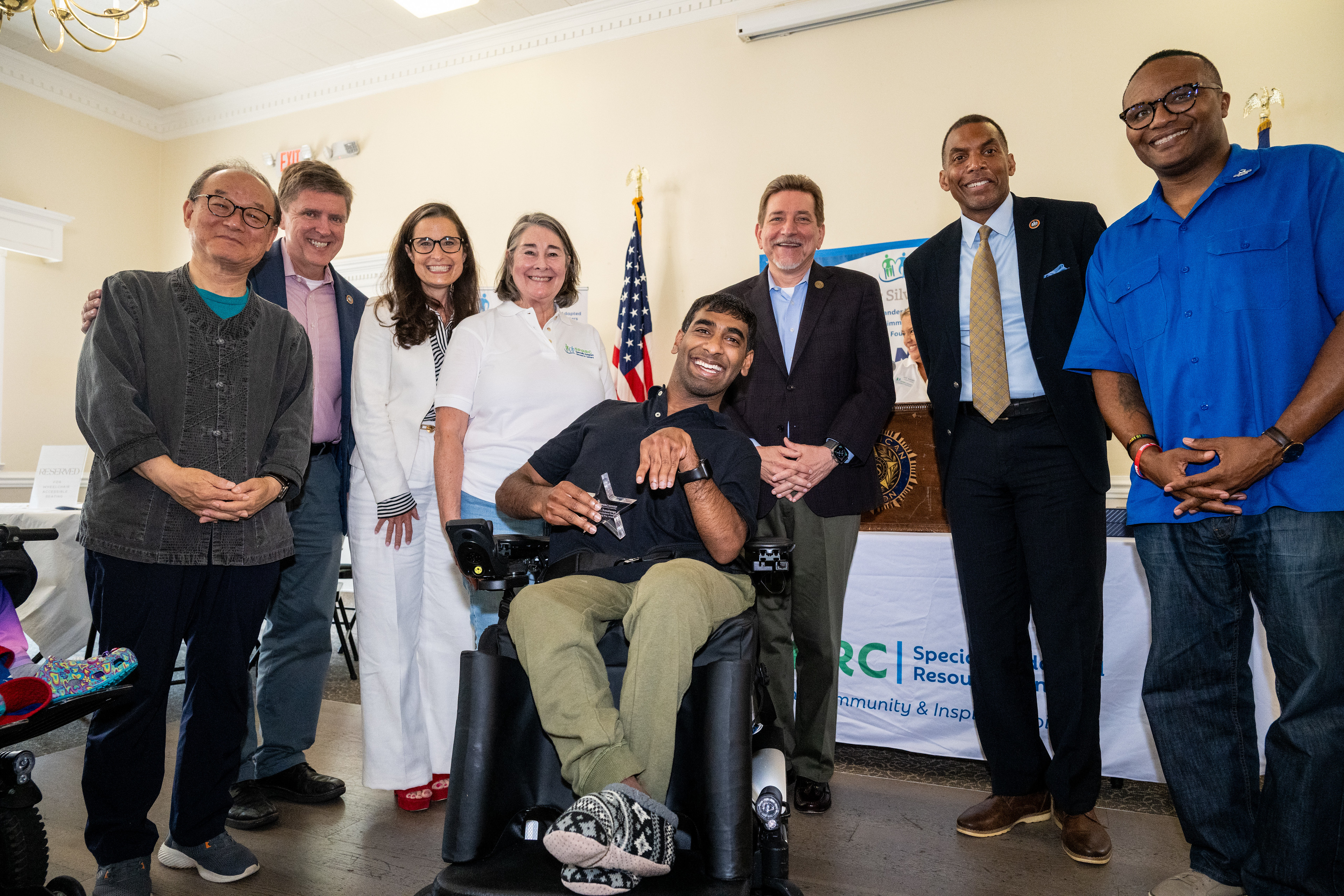
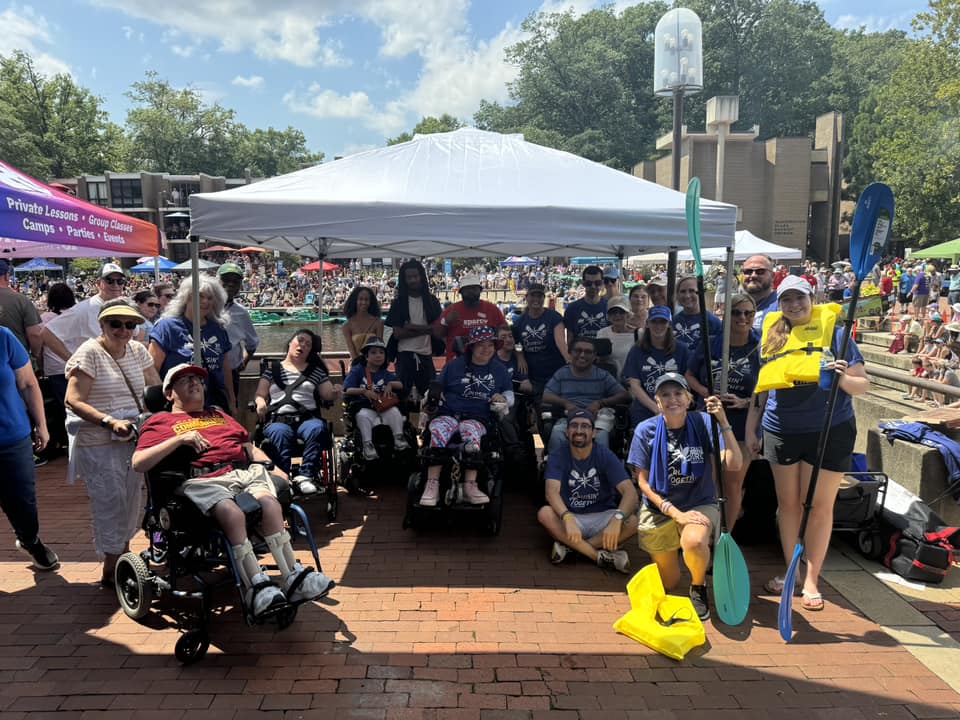
Community leaders and SPARC participants celebrate together
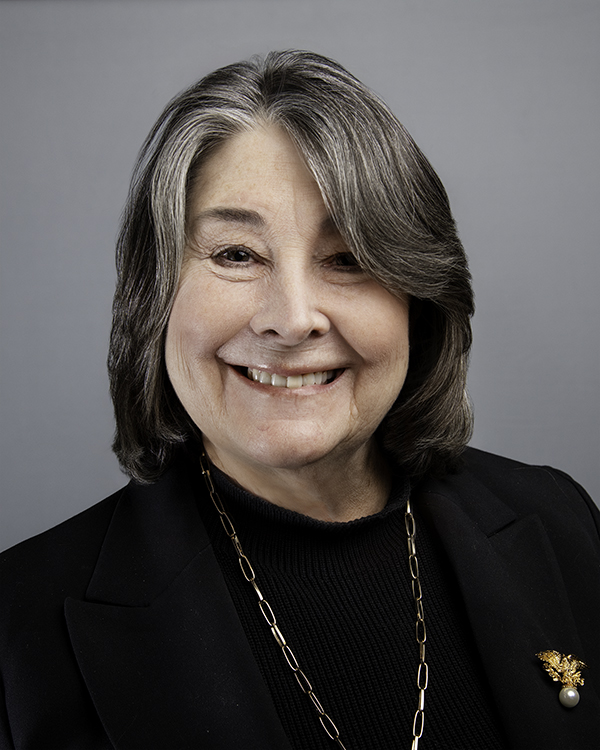
Dear Friends and Supporters,
This past year marked a turning point for SPARC—not only in what we delivered in our centers, but in how we engaged with the Commonwealth on behalf of the adults and families we serve.
Throughout much of the year, SPARC undertook an intensive legal review of Virginia's obligations under the Americans with Disabilities Act and the long-running case United States v. Virginia. That research was led by our Board Vice Chair, Hannah Irsfeld, whose work helped us fully understand the scope, rarity, and consequences of the Permanent Injunction now governing Virginia's disability service system.
What we learned was sobering and clarifying: Virginia remains under permanent federal court supervision because it has failed, for decades, to provide adults with disabilities access to services in the most integrated settings appropriate to their needs. Permanent injunctions are extraordinarily rare.
For SPARC, this legal reality confirmed what families have been telling us for years. Adults with severe and multiple disabilities—especially those who cannot work and require continuous one-to-one support—have been effectively left out of Virginia's service system.
This is why SPARC's legislative work matters so deeply. Our advocacy is not about expanding one organization for its own sake. It is about helping Virginia meet its civil-rights obligations and ensure that adults with the most significant disabilities are no longer invisible in public policy.
With gratitude and resolve,
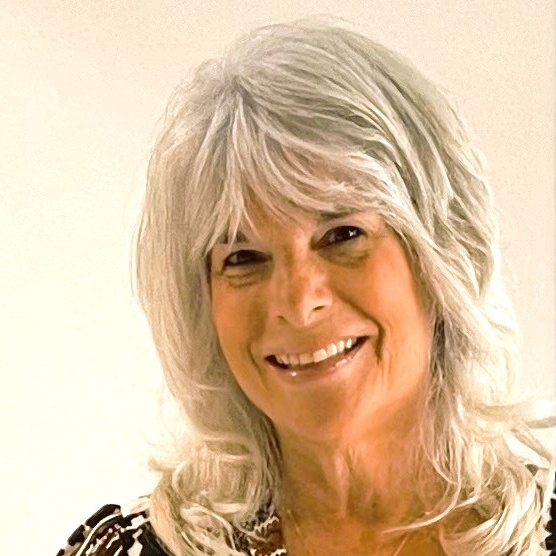
Debi Alexander
Dear Friends and Supporters,
In 2025, SPARC began shaping a national summit, A Call to Conscience – Advancing Inclusion for Adults with Disabilities who have Significant Support Needs. It marked a significant step beyond our long-familiar Northern Virginia roots and into the national arena.
At the summit, leaders, innovators, adults with complex needs and their families will: imagine systems that honor interdependence as a source of strength; center the voices of families whose lives are shaped by love, advocacy, and the daily realities of supporting adults with complex needs; challenge narratives that diminish potential, like ableism and implicit bias; illuminate systemic barriers that isolate; and design a future where purpose, dignity, and joy are not luxuries, but rights.
Together, we hope to move our country closer to the promise made thirty years ago by the Americans with Disabilities Act—a reminder that civil rights are not self-executing. They require vigilance, courage, and our collective effort.
We hope to see you at the summit on Monday, July 27, 2026, at the Jack Morton Auditorium on George Washington University's Foggy Bottom campus, when SPARC, in partnership with GW, calls the nation to reckon with its unfinished promises and to build systems worthy of every person's inherent dignity.
With hope and determination,
Ellen Dyke
Our impact in Fiscal Year 2025
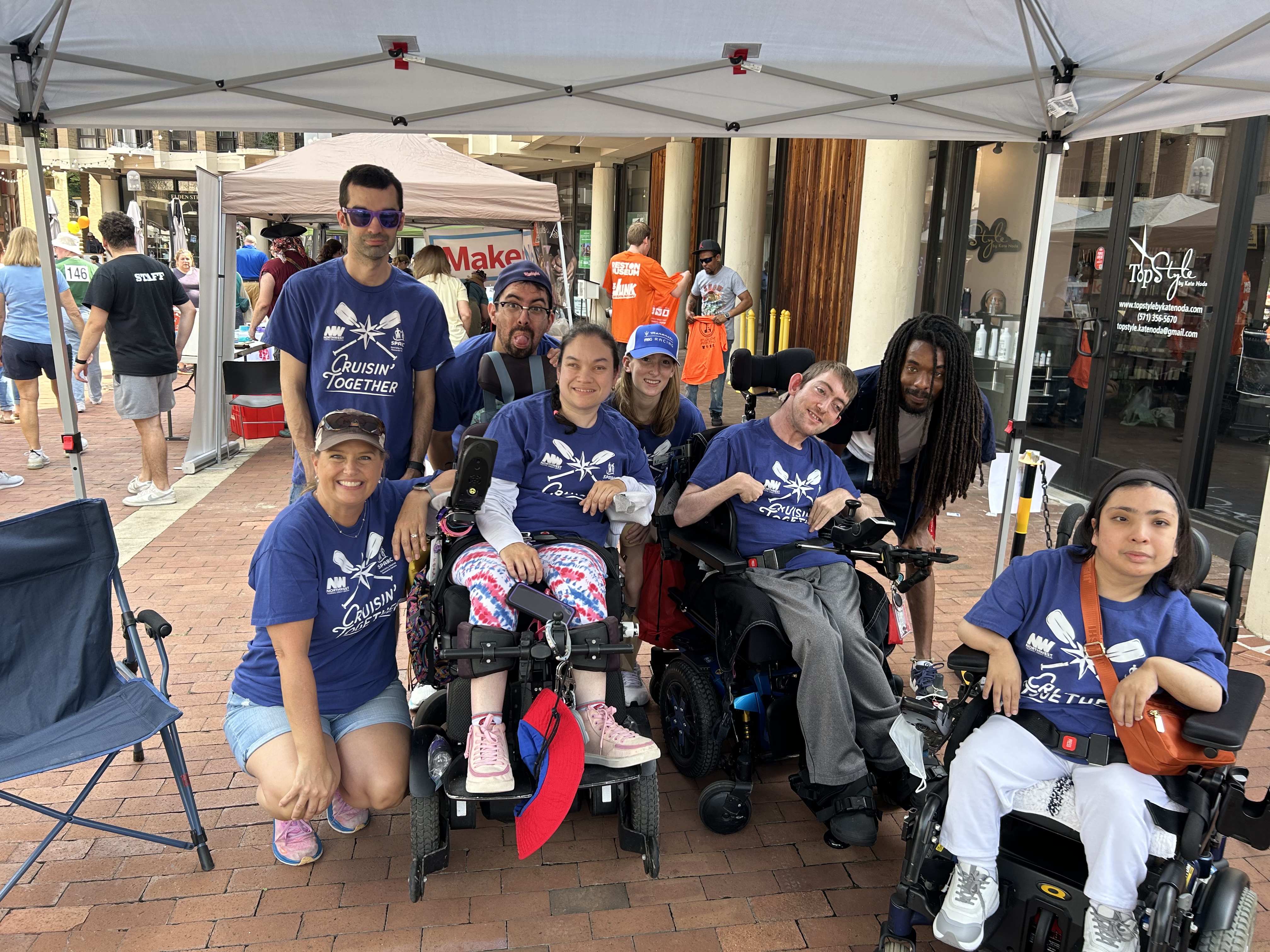
SPARC provides meaningful learning experiences, social connection, and a rightful place in the community


.jpg)

Before finding SPARC, Connor spent years aging out of the school system and being turned away from program after program because his needs were deemed "too complex." Without access to a suitable day program, his world grew smaller and more isolated.
His family rearranged their lives to fill a gap that should never have existed. This is what happens in communities without SPARC: adults are excluded, families are stretched to the breaking point, and isolation replaces opportunity.
When Connor finally walked through SPARC's doors, the outcome was profoundly different. With skilled, patient, credentialed professionals and a model designed specifically for complex needs, Connor found belonging, learned boundaries, built friendships, and began to thrive.
"His story is not exceptional—it is replicable. But only if systems choose to recognize and serve this population."

When Augie aged out of the school system, his mother Kathy faced a reality that thousands of families across Virginia know too well: there was nowhere for her son to go.
Traditional day programs couldn't accommodate his needs. Waitlists for Medicaid waivers stretched for years. The family was left with impossible choices—until they found SPARC.
Today, Augie arrives at SPARC each morning with a smile. He participates in music therapy, enjoys field trips, and has built meaningful friendships with peers and staff. For Kathy, SPARC has meant something equally profound: peace of mind, and time to care for herself while knowing her son is thriving.
"SPARC gave us our lives back—and gave Augie a life of his own."
For nearly twenty years, families caring for adults with severe and multiple disabilities were given the same answer when they asked why meaningful community day services did not exist for their loved ones: Medicaid doesn't cover it.
Without Medicaid funding, there were no services. And without services, families were left to manage isolation, exclusion, and unmet needs on their own.
That answer led families to create Specially Adapted Resource Centers (SPARC) in 2006—but it did not resolve the underlying policy barrier. Administrators continued to insist that public funding for community-based services could flow only through Medicaid, and that Medicaid's rules simply did not accommodate SPARC's participant-directed, one-to-one support model.
In late 2025, SPARC's Board Vice Chair, Hannah Irsfeld, was asked a deceptively simple question: Is that actually true?
What followed was months of rigorous legal analysis that fundamentally reframed the issue—not just for SPARC, but for how Virginia's service system for adults with disabilities is understood.
Hannah's analysis uncovered a critical but long-overlooked distinction: how a service is funded is not the same as whether the service must be provided.
Virginia's Medicaid waivers are one funding mechanism. But the Commonwealth's obligation to provide community-integrated services to people with disabilities arises independently under federal civil rights law—including Title II of the Americans with Disabilities Act, Section 504 of the Rehabilitation Act, and the Supreme Court's Olmstead decision.
Those obligations are not theoretical. Virginia remains under permanent federal court supervision in United States v. Virginia to ensure compliance.
By structuring its Medicaid regulations in a way that excludes participant-directed, one-to-one support for community engagement services, Virginia has effectively denied access to individuals with the most significant disabilities. Hannah's analysis made clear that this is not a policy choice insulated by federal Medicaid approval—it is a potential violation of federal civil rights law.
The work required far more than a surface-level policy review. Hannah carefully worked through:
Her conclusion was both nuanced and clarifying: this was not a story of bad faith. Rather, decades of institutional practice had blurred a straightforward legal principle—the right to services in the most integrated setting appropriate does not depend on whether Medicaid happens to fund a particular service configuration.
When Hannah presented her findings to SPARC's leadership, the impact was immediate. Families were given something they had long lacked: a coherent legal framework that explained not only why the system felt unjust, but why it is likely unlawful—and what the Commonwealth must do to remedy it.
That analysis now underpins SPARC's legislative advocacy, informs conversations with policymakers, and contributes to a broader, overdue reckoning with how states interpret their obligations to people with the most significant disabilities.
Just as importantly, it demonstrates what becomes possible when deep legal expertise is paired with an understanding of real-world systems and lived experience. For SPARC, Hannah's work did more than answer a question — it changed the conversation.
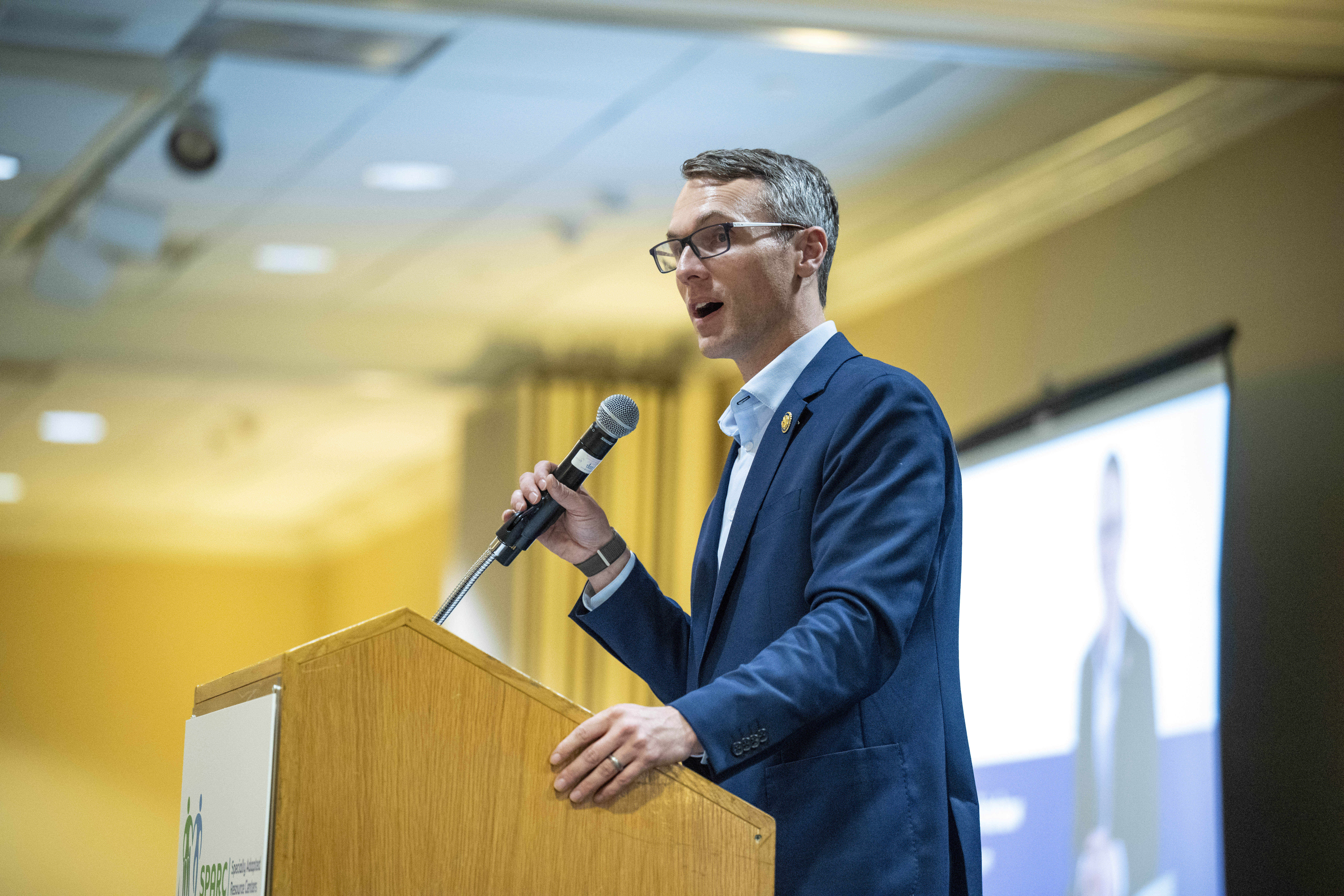
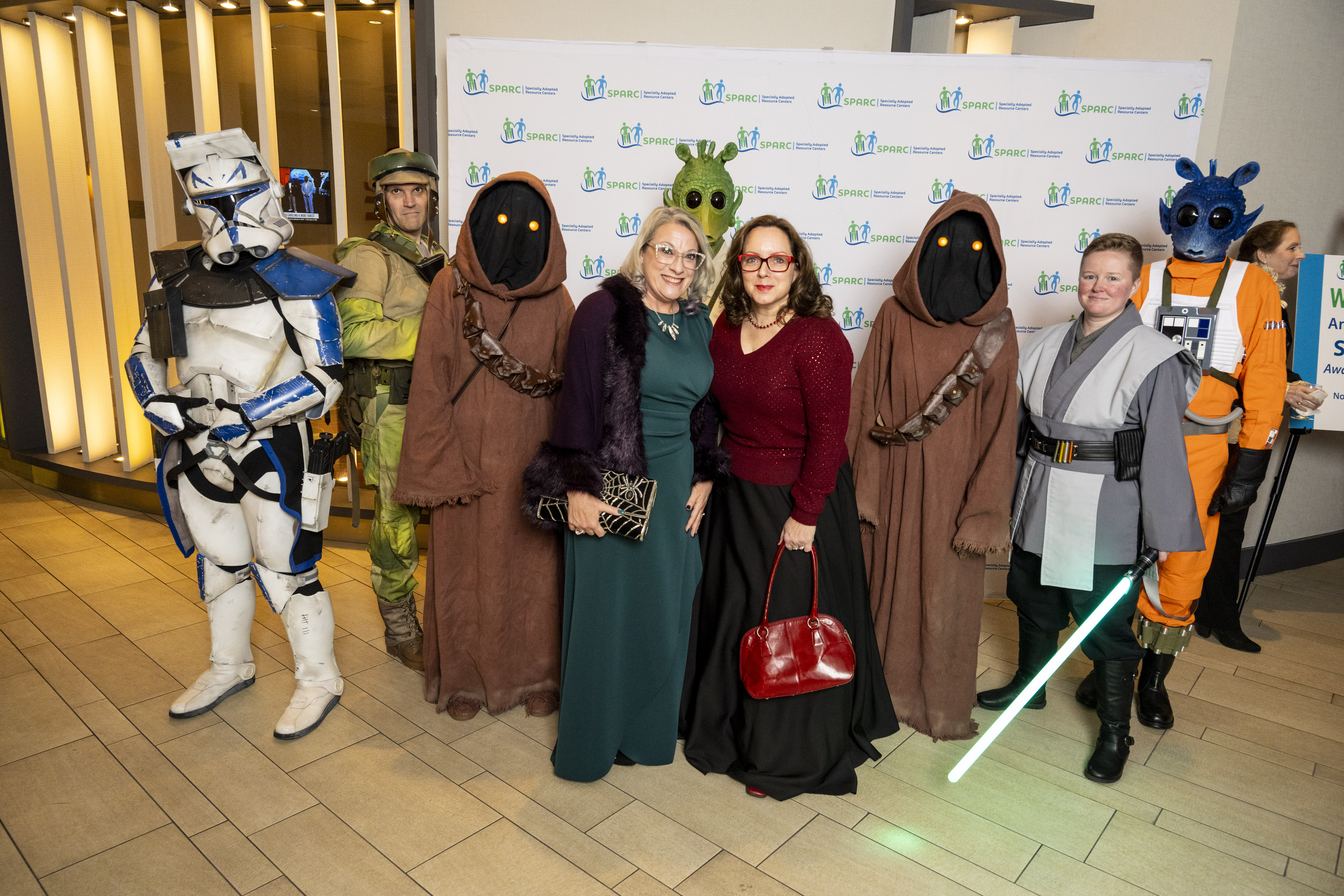

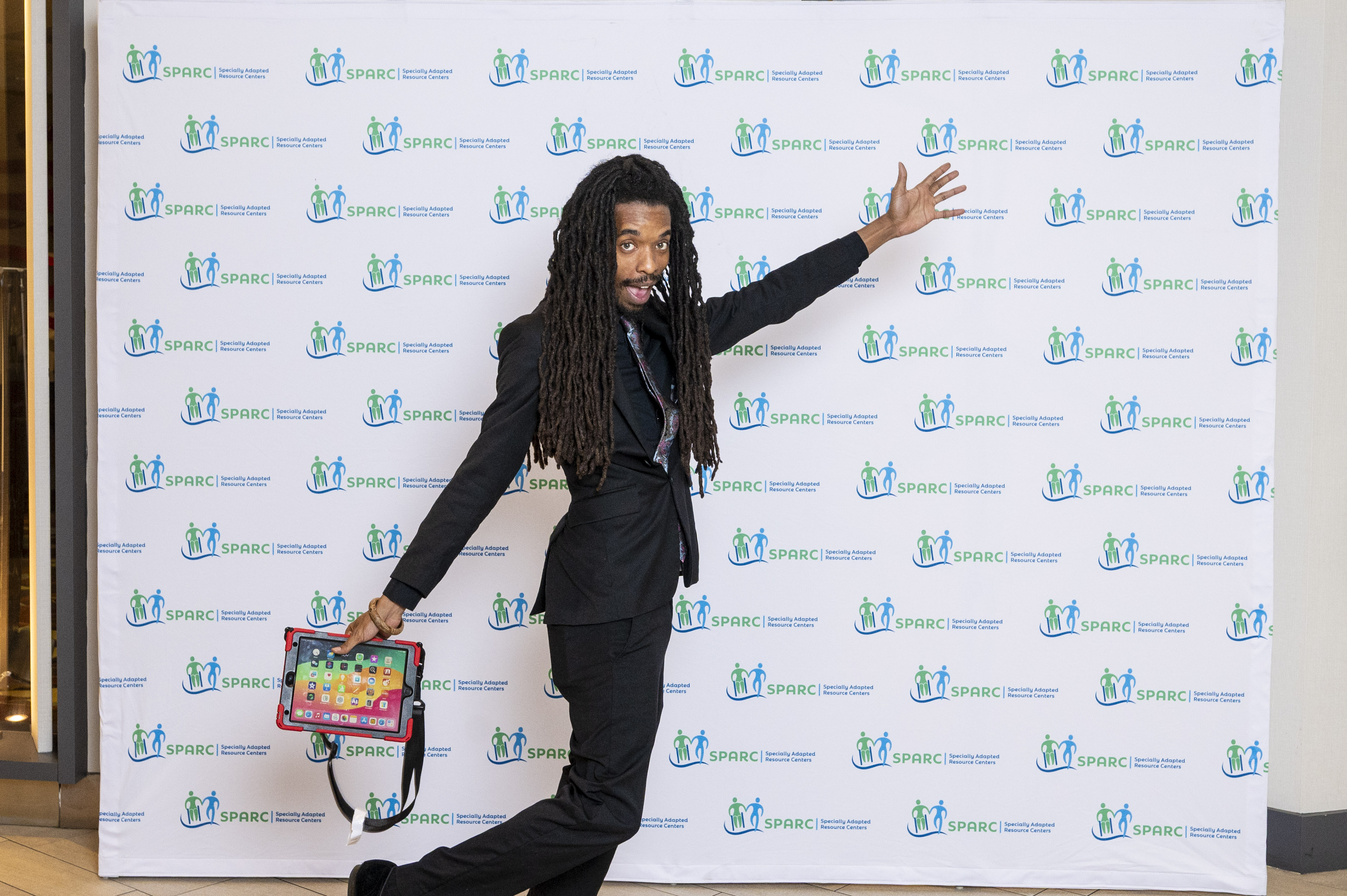

Over 200 community members gathered to celebrate the power of inclusion and raise critical funds for adults with severe and multiple disabilities.
Thank you to our 2025 Gala Sponsors and Partners
Special thanks for their extraordinary partnership




.png)




























.jpg)

Celebrating community, inclusion, and the spirit of giving
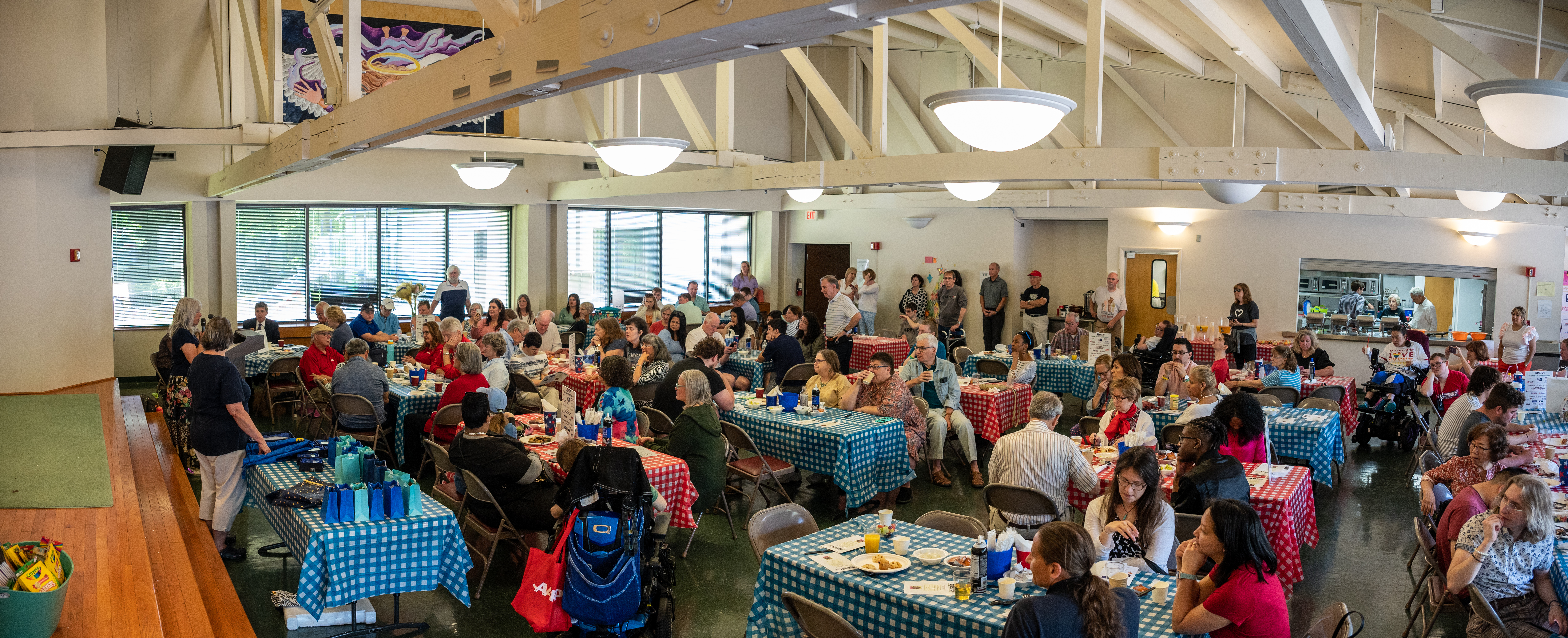
SPARC's Annual Pancake Breakfast brings together families, community leaders, and supporters for a morning of celebration, live entertainment, and a silent auction—all in support of adults with severe and multiple disabilities. The 2025 event honored Senator Jennifer Boysko, Senator Kannan Srinivasan, and Delegate Dave Reid with the Hero Award for their leadership in justice, inclusion, and action.

.png)

























Thank you to the generous businesses and individuals who donated items for our silent auction































FY 2025 Revenue and Expenses
SPARC's innovative participant-directed model delivers exceptional outcomes at a fraction of traditional costs
Thank you to everyone who made a gift this year
We have taken great care to recognize every donor who supported us this year. If we made an error in listing your name, please forgive the oversight and let us know so we can update our records with gratitude.
Join us for these upcoming events
National Policy Summit at George Washington University. Join leaders, innovators, and advocates to advance dignity for adults with severe and multiple disabilities.
An Evening to SPARCle returns! Join us for an unforgettable night of celebration, connection, and support for adults with disabilities.
Your support makes it possible for adults with severe and multiple disabilities to find belonging, purpose, and joy. Together, we are building fearless futures.
